
The Ollama browser extension I made to teach myself Dutch

I like trying things, experimenting with different technologies, knowing that everything is changing — including my own body. The atoms that make me today are only a temporary pattern. Most of them will be gone next year. And it makes me think that if I stop learning, stop exploring, stop moving, if I stop embracing change and challenging my brain, that very pattern that is me today would no longer be me.
Anyway, this was the preamble of what motivated me to try this experiment. I wondered what would happen if we reversed the roles and made AI my native teacher — like a parent teaching a child a language. Instead of translating words, it would explain meaning through context, language, and images. And all I have to do is just unpack meaning of words, the way a child slowly figures things out.
I thought it might give me a glimpse of what a child experiences when absorbing their native language from a parent just by exposure to it. With no real translations, because there's no way to translate words you don't know yet. You learn both the meaning and the word at the same time. That thought fascinated me and prompted me — now, really, no pun intended, to start building it.
In fact, I don’t know about your childhood, but when I was a kid I remember hearing about children who would go live with host families in Italy, Germany, et cetera for a while, just to pick up the language from native speakers — almost as if they had been born there. At least that was the theory I pieced together from rumors when I was a kid myself. I have no clue how it really was in practice, or how far those stories were from the truth, probably somewhere in the middle. But the concept stuck with me, something I could only imagine.
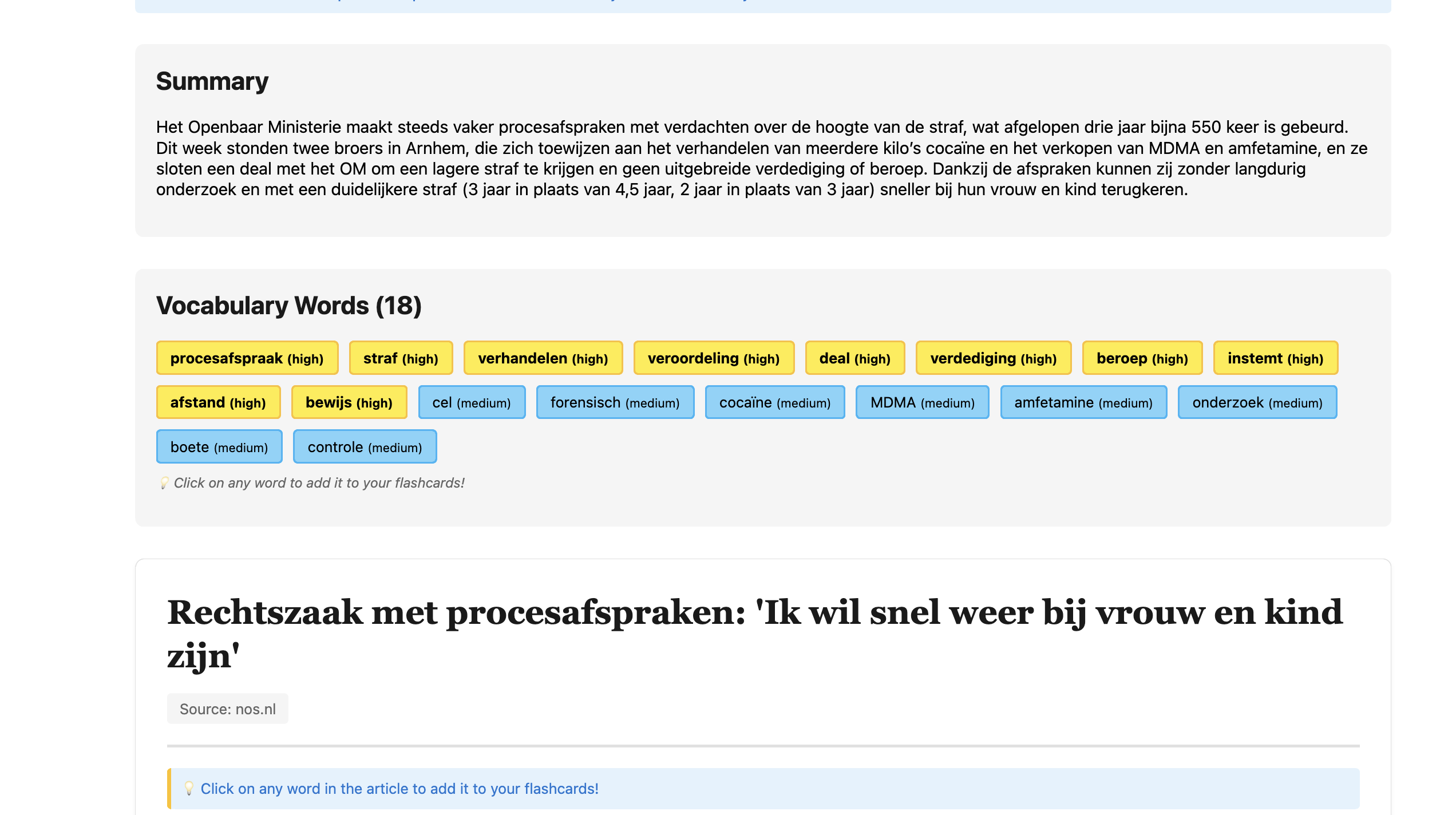
So this project is my small experiment to visualize what my childhood imagination thought it might be like: learning a language directly from a native speaker, and having nothing else. No Google Translate, No Pocket Translator not even a dictionary for that matter.
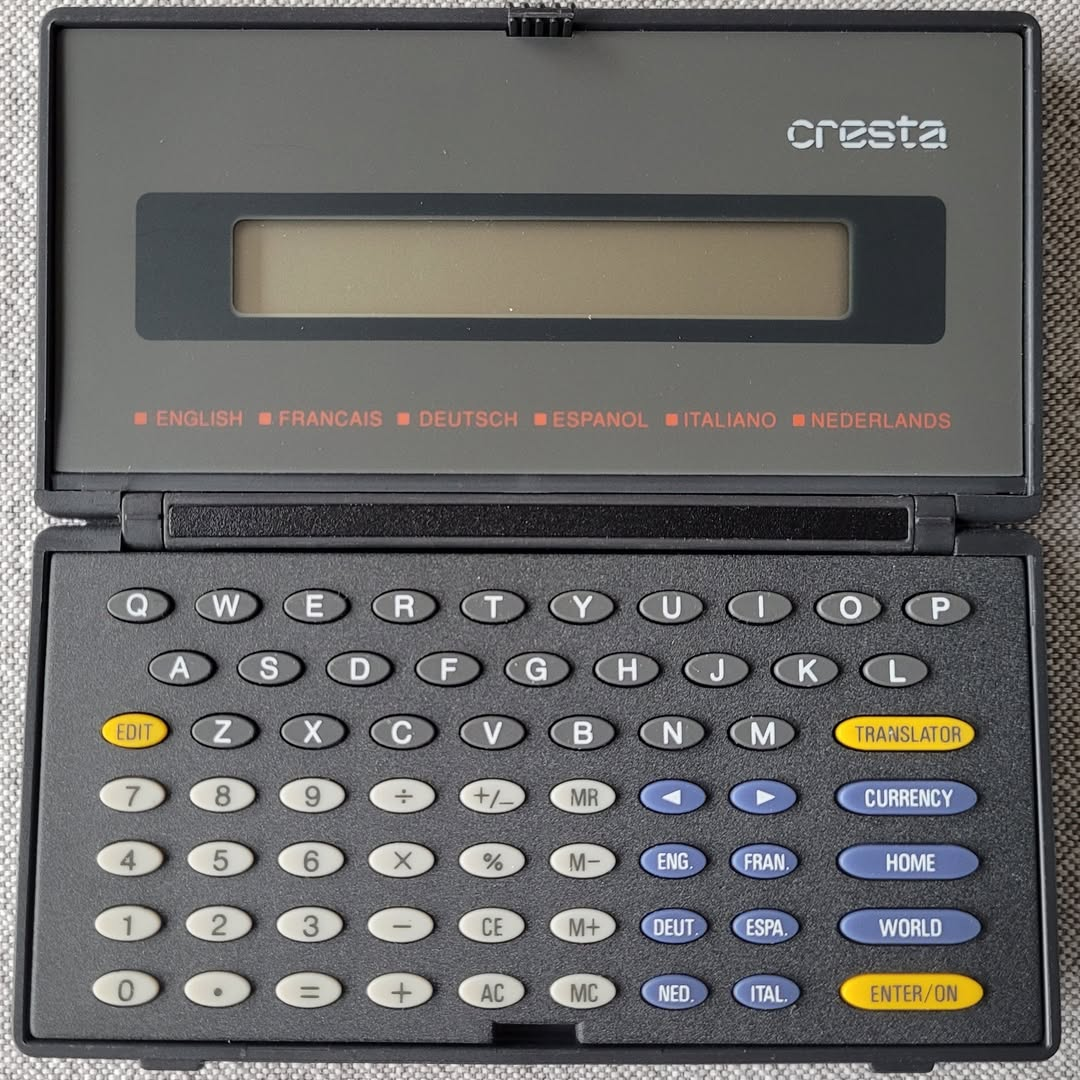
I had been curious to try building a prototype with variety of LLMs. And perhaps, the fact that I never developed any browser extension before, it was a great opportunity to do – two flies in one slap.
My first Dickens novel with vibe-coding
I won’t go into the exact number of AI tools I tried, except to say that the ones I used eight months ago for my first rough MVP draft created pure chaos. Whenever I managed to get something working and then tried to extend it or refactor the code, I would suddenly face a new pattern I had never seen before, as if I were reinventing the wheel again and again. – Why not? I understand that companies exist to make money, and remembering how expensive it once was to buy a computer, I still couldn’t shake the feeling that this was somehow utterly wicked. Token after token, limit after limit — a subscription meant to last a month could be burned through in just a day or two. At times my project began to resemble a Charles Dickens novel — sprawling and never quite ending. At other moments it felt more like a heavy Oxford dictionary, describing the same idea over and over again in slightly different words.
"A bad workman blames his tools"
Recently I discovered AGENTS.md — a structured way to give AI agents clear instructions for a project. That small shift changed everything. Instead of chaining chaos, I started chaining agents to cross-verify one another — and suddenly it wasn’t always a silly model. Sometimes it was just a silly me, assuming that a thinking model would naturally outperform one that simply understands context and follows instructions — rather than pausing for what feels like a smoke break, burning through thousands of tokens between each thought, as if they were mined from some fragile, non-renewable layer of the earth.
Back then I hadn’t been doing any proper planning, no context, nothing useful for the model to work with. I was just throwing simple prompts at it, hoping it would figure everything out — because the prophets had promised me it would replace us.
What chaos taught me
The whole experiment taught me how to guide an LLM without letting it get lost in its own context. – Somewhere, I pity it. Because it has no one to talk about it. However, the outcome was that it validated what I think normally happens with whatever we people do.
The creative 3 phase model
- First comes the mess: throwing everything at it with no rules, because frankly neither of us knew any rules.
- Then draft: something takes the shape out of the disorder. It grows into something that kinda works. (applies to this article, too)
- And third: it forms a shape from the best practices and good patterns. (Handcrafted, unfortunately)
The first MVP was a disaster — it wrapped every single word on the page in a <span>, generating a DOM element for each one and promptly overloading the browser. But it was enough to verify that Ollama could explain a word and give me a clear picture of what was missing. It reminds me of drawing — you start with a rough sketch that barely resembles the shape, and then you iterate until it does.
A dictionary would've been cheaper, absolutely. But I think that's just the nature of learning — if you want something to stick, it probably shouldn't come easy. And sometimes the best way to make something stick is to make it slightly absurd — a strange image lodged in your memory does more than a clean definition ever could.
With multiplied heads it's easier to recall

And this is where Stable Diffusion shines — maybe the fact that AI images are notoriously known for six-fingered hands and multiple limbs makes it a spectacular starting point for something that won't escape our minds anytime soon — a finding backed by research on bizarre imagery and memory.
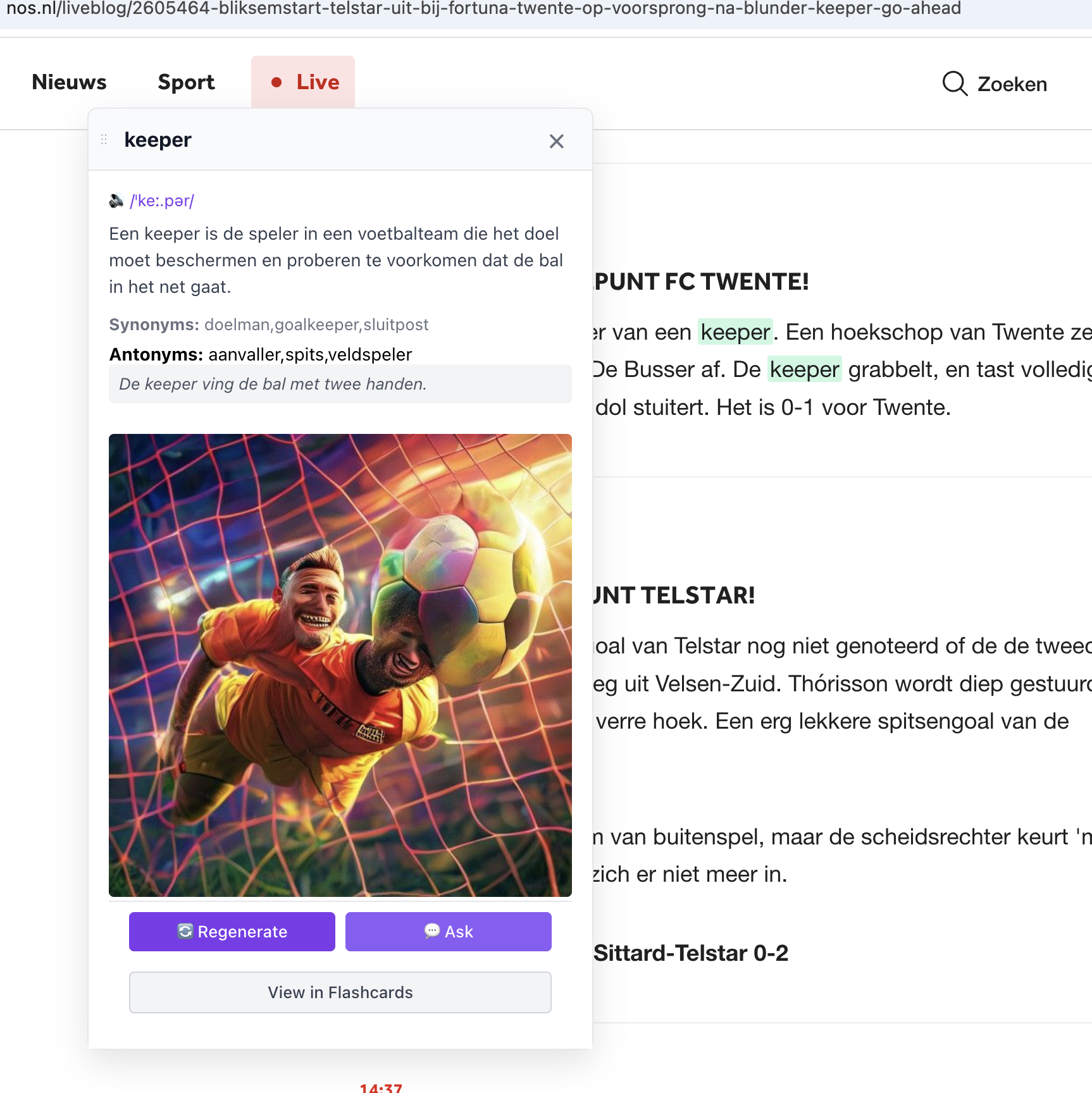
Another peculiar thing about this approach is that you can continue a discussion with it about the word. Do you remember that game where you put a sticker on your forehead and have to guess what it says? Now imagine doing so with a word in a language you don't know. You ask it a question, it gives you some clues, and somewhere in that back and forth moment, the word sticks. Because if you think about it, how do people communicate when neither speaks the language perfectly? They gesture, point, mime — anything but words. And... It works! – Maybe half it wrong, but, that's the process. That's exactly what this becomes, not just plain memorization, but a game your brain actually is eager to play.
When you want to challenge your memory, the extension lets you do that too. Highlight a word in any article, add it to your flashcards automatically, and switch into game mode when you're ready to practice figuring it out.
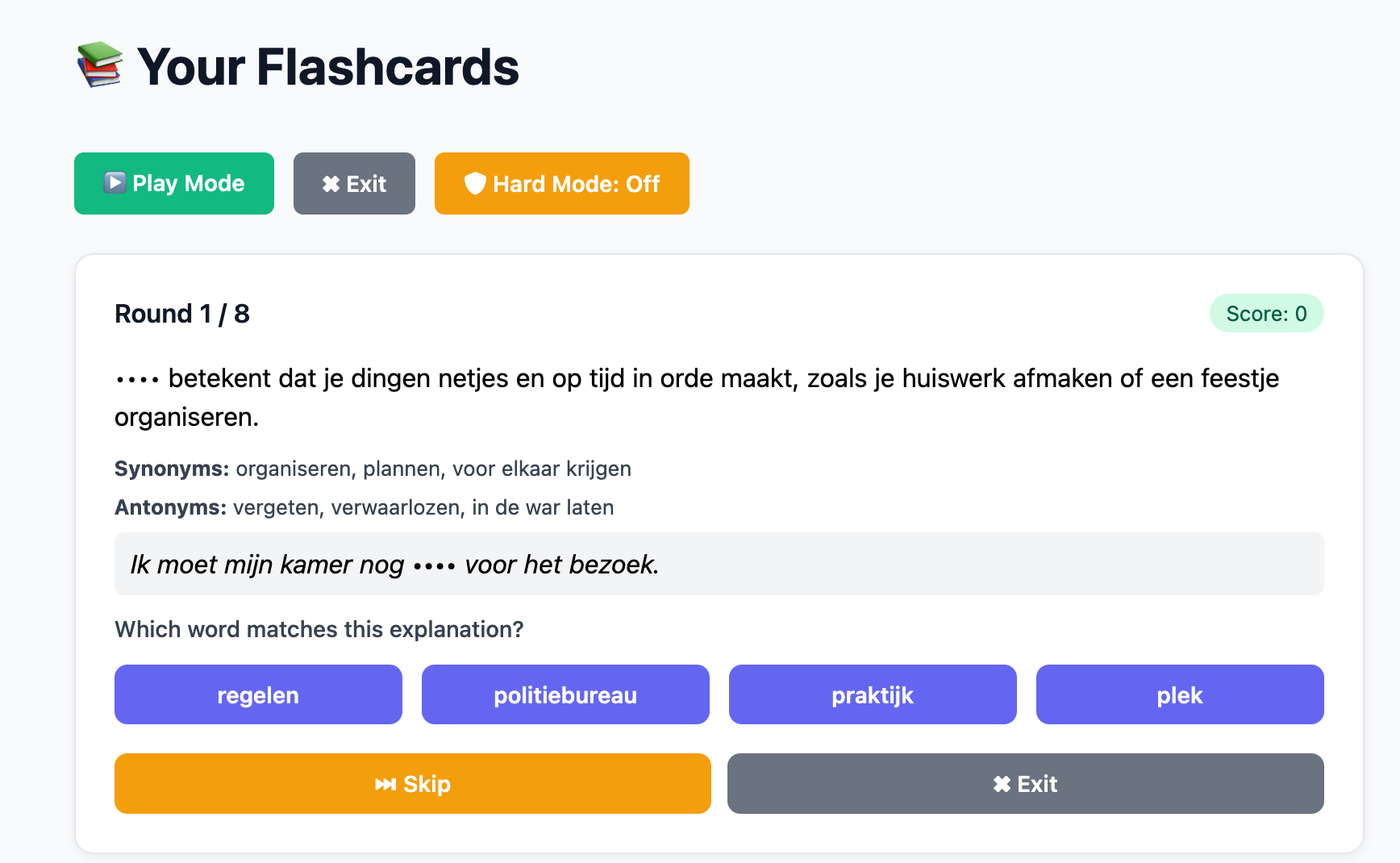
We can survive without AI. We cannot survive without water. But somewhere between the two, there's a curious mind looking for better ways to learn — and for now, that's enough justification for me.
If you want to run the experiment yourself, the project is open on Codeberg. Fork it, break it, make it yours.
We are all temporary patterns anyway — might as well pass this one on.
Best regards,
Aiden